Career change CV: your experience fits, the words don’t yet.
You're not underqualified, your CV just doesn't say so yet. Paste the job ad and we bring your matching experience forward. Anything that's genuinely missing shows as an open point.
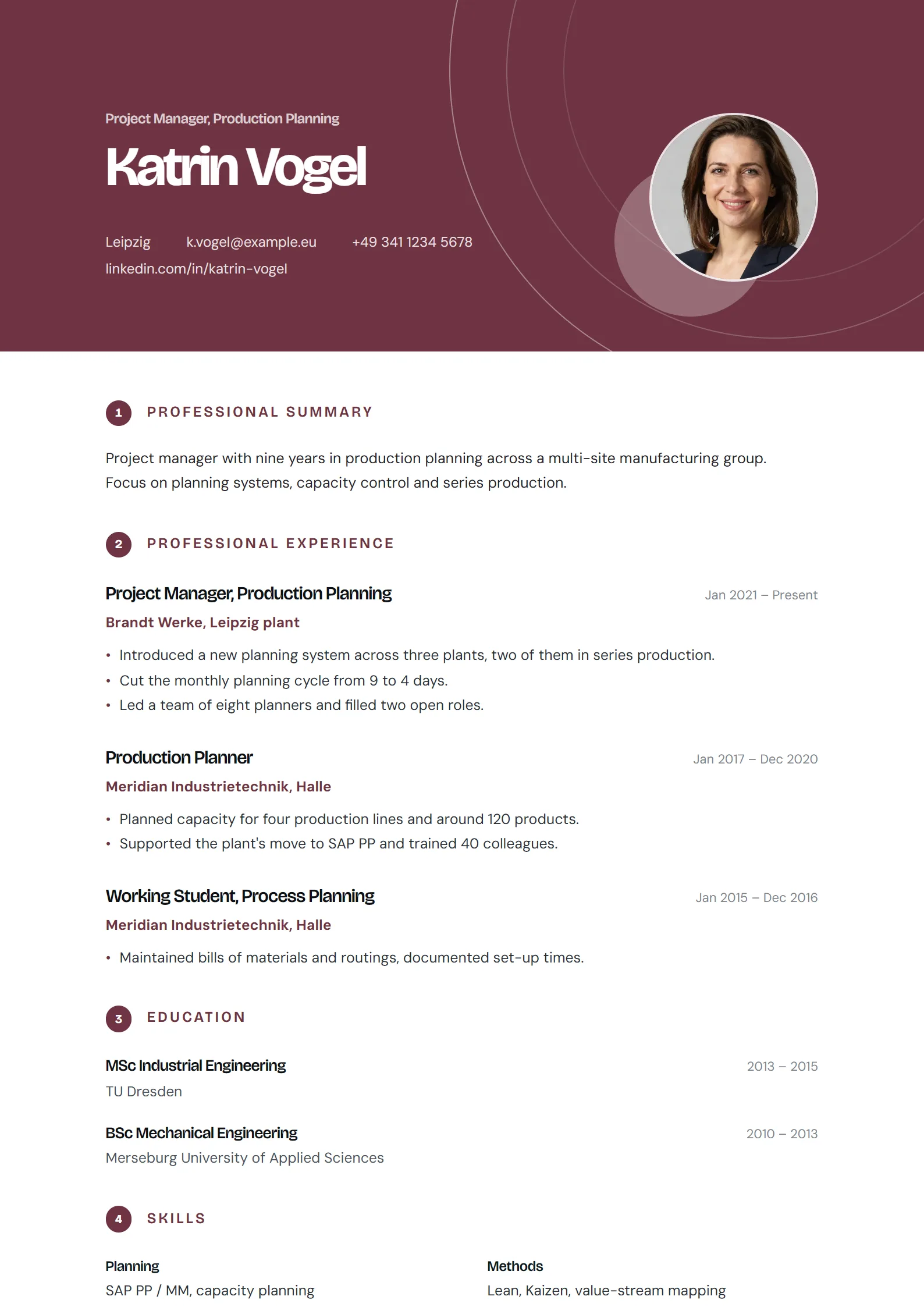
Your experience already fits. Your CV is still speaking your old field's language.
Much of what the new role asks for, you've already done in your previous role. It just had a different name there. Tailoring brings that connection forward, using the facts from your CV.
A career change CV puts transferable experience first, frames the switch in a short profile and names the gaps openly.
- Transferable evidence first
- The advert's wording, only where it's earned
- Gaps named openly
- Titles keep their level, dates stay untouched

Selin Arslan
Deputy store manager · Modehaus Berger, Erfurt
- Customer care for regular customers, including complaints.
- Owned order processing, from stock orders to supplier contact.
- Team coordination for twelve staff, including shift planning.
Still open: SAP SD. The ad asks for it and your CV does not name it, so it stays an open point.
How a career change CV is structured.
The structure follows the tabular CV German employers expect, newest role first. For a career change, what moves is what sits at the top and how much space each role gets.
Header with contact details
Name, phone number, email address and town go at the very top. A photo is customary, though Germany's Federal Employment Agency says it is no longer a must.
Profile
Three or four sentences right under the header say what you bring and which role you are aiming for. For a career changer it is the most important paragraph, because it frames the switch before anyone reads your roles.
Training for the new field
Courses, certificates and qualifications you gained for the switch move up, often above your work experience. They show you have prepared for the new field on purpose.
Work experience
Roles stay in reverse chronological order. Under each one, the tasks that matter for the new role come first, and details from the old field get shorter.
Skills and languages
Software, methods and languages with levels, ordered by what the ad asks for. What you used every day in your old job belongs here if the new role needs it.
Transferable skills, with examples.
Transferable skills are tasks that work the same in any field and only go by a different name. You describe what you did with the term the new industry uses for it, as long as it is the same work.
From nursing to quality management
If you documented care to set standards and took part in inspections, you know how to work with requirements, audits and inspection records.
From teaching to corporate training
Planning lessons, setting learning goals and speaking to groups is what designing and delivering training sessions involves.
From hospitality to event management
If you coordinated shifts, suppliers and fully booked evenings, you bring planning under time pressure, supplier management and budget responsibility.
From a trade to technical sales
If you advised customers on site and priced up quotes, you combine product knowledge with sales experience.
Back each transferable skill with a number, a scale or a result. “Designed training for 25 new starters” convinces more than the word “communicator”.
This is what tailoring looks like.
Upload your CV
CV read · 3 roles, 1 degree found
How to explain the switch.
A career change needs a reason that points forward. In your profile and cover letter, say what draws you to the new role and what experience you bring to it. What moved you away from your old job fits in a clause at most.
If there is a period of reorientation between two roles, give it a line of its own, for example “Career reorientation and project management training”. Germany's Federal Employment Agency advises naming gaps of more than two months openly and specifically.
A profile for a career change.
The profile sits right under your contact details and sums up in three or four sentences who you are professionally, what you bring and which role you want. It connects the old field and the new one before anyone reads your roles.
An example for a move out of teaching: “Primary school teacher with ten years' experience in lesson planning, parent communication and digital learning support. Moving into corporate training, bringing experience designing learning units for groups of up to 28, plus a trainer qualification.”
Rewrite the profile for every application. It is where the ad's requirements and your experience meet for the first time.
What tailoring does for a career change.
Transferable evidence first
Whatever from your previous field matters for the new role moves to the top.
The advert's wording, only where it's earned
We use the advert's own terms, but only where your CV genuinely backs them up. Everything comes from the CV you uploaded.
The honest fit score, requirement by requirement
Instead of a flattering number, you see where your CV stood before, where it stands after, and which of the ad's requirements are now covered.
The cover letter addresses the gap openly
A career change doesn't need hiding. The cover letter frames it as a decision, not a flaw.
After that, every line is yours.
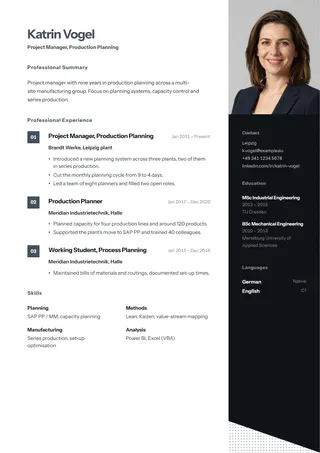
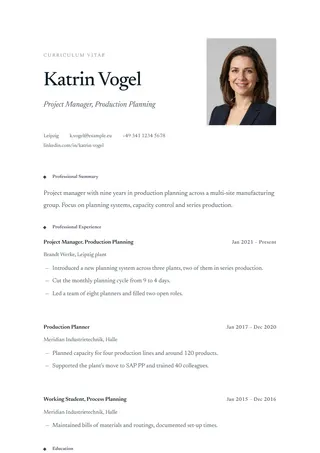
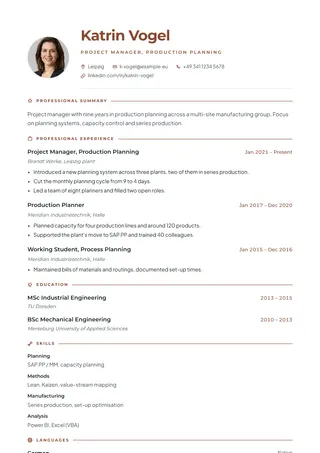
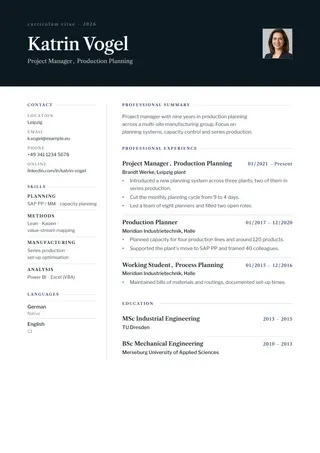
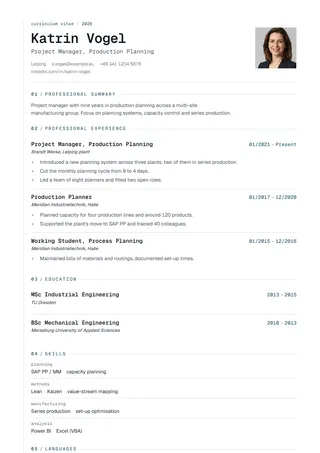
If something is missing, it shows as an open point.
Job titles, dates, employers and qualifications stay exactly as they appear on your CV (job titles are translated only when your German CV goes into English), and a validator checks every tailored version against the original before you see it. Your cover letter can name the career change openly. For this move, that is usually the stronger approach.
Tailor it free nowWant a check first? Free CV check →Frequently asked questions about career change CVs.
How do I write a CV for a career change?
Bring forward the experience that matters for the new role, even if it comes from a different field: a project, a responsibility, a number. Describe it with the advert's own words, as long as they mean the same work. Dates stay untouched, and so do job titles unless your German CV goes into English; otherwise only order and wording change.
Do I have to explain the gap or the switch?
On the CV, a line of its own for a period of reorientation is enough, because what you did is what counts there. The cover letter is worth more: one sentence naming the switch as a decision answers the question before it's asked.
What experience counts toward a career change?
Anything you can demonstrably point to that the new role asks for, regardless of which industry it happened in. A project you led, a number you moved, or a method you used counts on its own terms, not by the title it sat under.
Does the AI invent experience I don't have?
No. A validator checks every tailored version against your original and allows no new facts. A missing qualification is named as a gap, not quietly filled in.
How do I write the cover letter for a career change?
Name the switch in one or two sentences as a deliberate decision, and back it with the transferable experience your CV already shows. Resume Copilot drafts that paragraph from your profile and the advert.
What does it cost?
The first three tailored applications are free, the first one without even creating an account. After that you pay with one-off credit packs, no subscription, and credits don't expire. Prices are on the pricing page.
How long can a career change CV be?
One to two pages, like any tabular CV. Germany's Federal Employment Agency names two A4 pages as the upper limit. Older roles that show little for the new job shrink to title, employer and dates.
Should I leave out roles from my old field?
No, the timeline should stay complete. Roles from your old field just get less space: title, employer, dates and one bullet that shows something transferable.
Does tailoring help if I have no experience in the new field yet?
Yes. Tailoring works with what your CV backs up and orders it by the ad's requirements. Anything the ad asks for that your CV doesn't name shows as an open point under the fit score, so you know which gap to address in your cover letter or the interview.
Can I have my CV checked first?
Yes. The free CV check tests structure and completeness: contact details, dates, numbers and gaps in your timeline. You don't need an account for it.
Your experience counts. Say it in the new role's words.
Paste your CV and a job ad, and see the tailored version before you sign up for anything.
Tailor it free now